Can I Have Multiple CSCS and CHN Accounts?
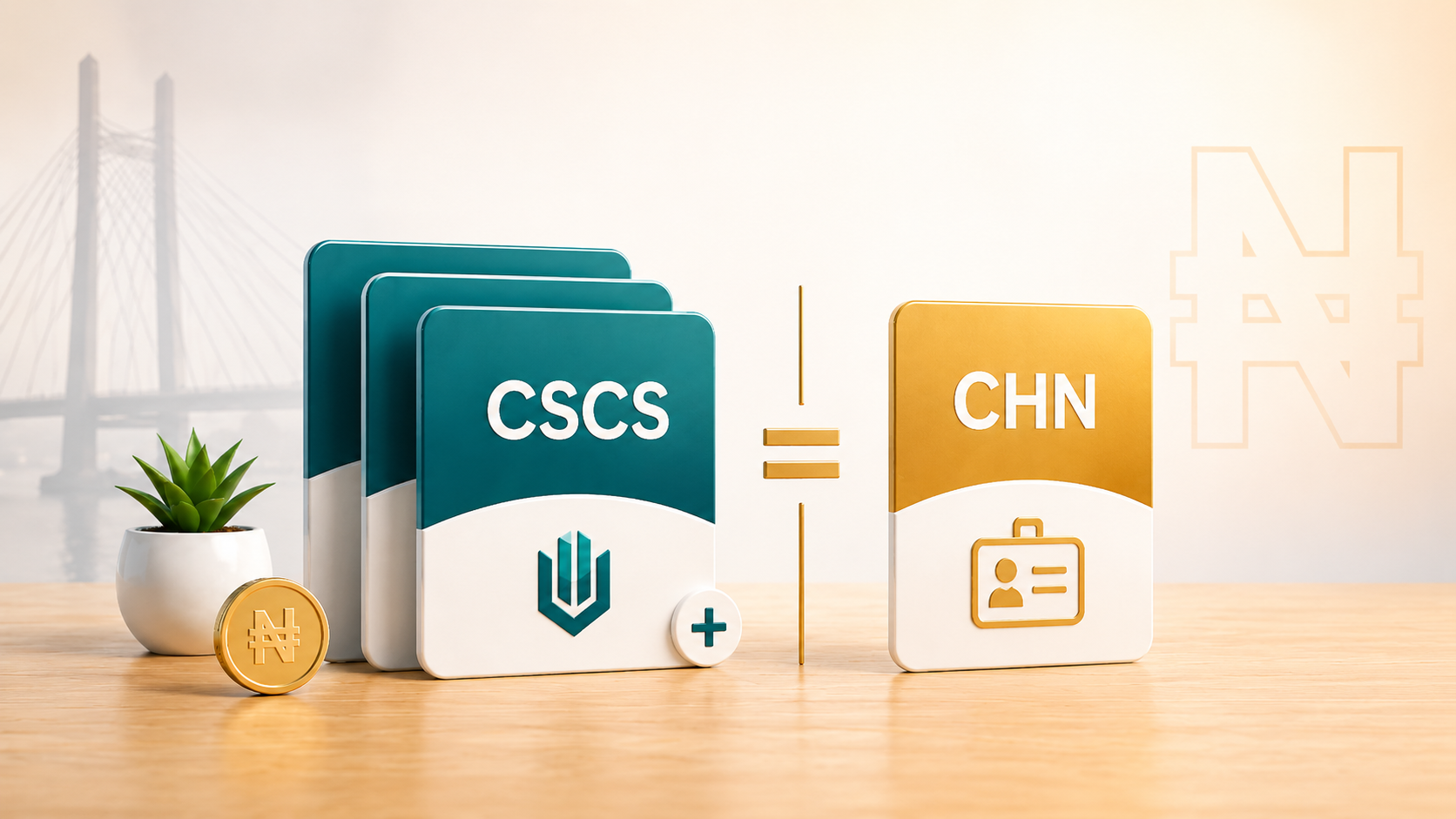
An investorA person or organisation that commits capital with the expectation of a financial return. in Nigeria may open accounts with several stockbrokers. Each broker may create a separate CSCS accountAn electronic securities account maintained within Nigeria's central depository system. for the investor, but every one of those accounts should connect to the same Clearing HouseAn institution that clears trades, calculates obligations, and manages settlement and default risk. Number, or CHNA unique clearing-house number used to identify an investor within Nigeria's securities depository system..
This arrangement often causes confusion. Some investors assume that a CSCS account number and a CHN are two names for the same thing. They are related, but they serve different purposes.
A simple way to understand the difference is this:
- Your broker account is your relationship with a stockbrokerA licensed intermediary that buys and sells exchange-traded securities for clients..
- Your CSCS account holds the securities associated with that brokerage relationship.
- Your CHN identifies you as the beneficial ownerThe natural person who ultimately owns, controls, or benefits from an account or investment. of those securities across the Nigerian capital market.
To understand why one person may have several CSCS accounts but only one CHN, we need to begin with the stockbroker.
#Who Is a Stockbroker?
A stockbroker is a person or firm authorised to buy and sell securities on behalf of investors.
Individual investors cannot ordinarily place orders directly on the Nigerian ExchangeNigeria's principal securities exchange, where listed shares, bonds, ETFs, and other instruments trade. Limited. They submit their orders through a licensed stockbroking firm, also known as a Trading License Holder.
For example, suppose you want to buy 10,000 shares of a company listed on the Nigerian Exchange. You deposit money with your broker or fund your investmentAn asset or commitment of money made with the expectation of future income, growth, or both. account, then place an order through the broker's platform. The broker sends the order to the market and executes the purchase when a matching seller becomes available.
A broker may also provide services such as:
- opening and maintaining your investment account;
- executing buy and sell orders;
- issuing contract notes and transaction statements;
- helping you transfer shares;
- connecting your account to the Central Securities Clearing SystemNigeria's central securities depository and clearing infrastructure for eligible capital-market securities.;
- processing Direct Cash SettlementA market process that sends sale proceeds directly to an investor's nominated bank account rather than through a broker's account. instructions; and
- providing market research or investment advice.
Many Nigerian investors no longer meet their stockbroker by walking into a physical office or sending an email. They encounter the market through fintech apps.
#What About Investment Apps and Digital Sub-Brokers?
Apps such as Bamboo and RiseVest may provide a digital route into the stock market.
The investor sees the app, creates an account, funds it, checks share prices, and submits buy or sell instructions. Behind that interface, however, a licensed stockbroker may still be responsible for executing the transaction.
A simplified structure looks like this:
Investor
   |
Investment app or digital sub-broker
   |
Licensed stockbroker
   |
Nigerian Exchange and CSCS
A digital sub-broker provides the technology through which investors access brokerage services. It may collect the investor's details, display available securities, transmit orders, and provide portfolioThe complete collection of investments owned by an investor or managed under one mandate. information, while a sponsoring or partner stockbroker executes the trades.
This means you may have a relationship with a stockbroker even when your only visible point of contact is an app. The app account, broker account, and CSCS account are still different records. The app provides the interface, the broker executes or arranges the transaction, and CSCS records the securities credited to the relevant account.
Not every investment app operates in the same way. Some platforms provide brokerage access, while others manage portfolios, funds, or pooled investment products. An investment manager, for example, may invest money on behalf of several customers without opening a separate personal CSCS account for every underlying securityA tradable financial claim or ownership interest, such as a share, bond, or fund unit. held in the portfolio.
So using an investment app does not automatically mean you have a CSCS account. It depends on the product you bought, the broker or manager behind it, and how the investment is held.
#What Is a Broker Account?
A broker account, or stockbroking account, is the account you maintain with a particular stockbroking firm.
You may open it directly with a traditional stockbroker or through a digital sub-broker such as Bamboo. In either case, the account records your relationship with the broker responsible for executing or arranging your transactions.
It may contain:
- cash deposited for investments;
- buy and sell orders;
- transaction charges;
- executed trades;
- account statements; and
- other information connected to your relationship with the broker.
The broker creates and manages this account within its own system.
You may have more than one broker account. For example, you might have:
- an account with Broker A for long-term investments;
- an account opened through a fintech app connected to Broker B; and
- an account with Broker C because you prefer its research or advisory service.
These are separate commercial relationships. Opening an account with Broker B, whether directly or through an app, does not automatically close your account with Broker A.
A broker account is not necessarily the final record of where your shares are held. Nigerian listed securities are deposited and settled through the Central Securities Clearing System. An account displayed inside an investment app is also not automatically a CSCS account, because the app may show Nigerian shares, US shares, mutual funds, and managed portfolios in the same dashboard, and those investments may be held through different brokers, custodians, or depositories.
#What Is CSCS?
CSCS means Central Securities Clearing System Plc.
CSCS is Nigeria's central securities depository and clearing and settlement infrastructure. It keeps electronic records of securities, processes transfers between buyers and sellers, and supports the settlement of transactions completed on the capital market.
Before securities were fully dematerialised, investors commonly received physical share certificates. Today, shares deposited in CSCS are recorded electronically.
When you buy shares through a broker, two things must happen:
- The seller must deliver the shares.
- The buyer must deliver the money.
CSCS supports this settlement process and records the securities in the appropriate investor account. Your broker executes the trade, while CSCS maintains the depository record showing the securities credited to your account.
#What Is a CSCS Account?
A CSCS account is an electronic securities account maintained within the CSCS system.
It is where shares and other eligible securities associated with an investor are recorded. Your CSCS account number identifies that particular account within the depository.
A stockbroker will usually help you open the account. If you invest through a digital sub-broker, the app and its partner broker may complete this process behind the scenes. You may therefore have a CSCS account even though you have never visited a stockbroker's office.
A typical digital process may look like this:
Investor registers through an app
            |
The app collects the investor's details
            |
The partner broker opens the relevant market accounts
            |
A CSCS account is created or linked
            |
Purchased Nigerian shares are credited to the account
The precise arrangement depends on the platform. If the platform offers Nigerian listed shares, it should be able to explain whether you have a personal CSCS account, the broker responsible for the account, and the custody arrangement used for your shares.
A CSCS account is normally associated with the broker through which it was created. This broker connection explains why an investor can hold multiple CSCS account numbers, which the next section works through.
#Why Can You Have Multiple CSCS Accounts?
You can have multiple CSCS accounts because each account represents a separate securities-account relationship. Each account needs its own number so that CSCS and the relevant broker can identify the securities held within it.
A new account may be created when you:
- open an account with another stockbroker;
- use a digital sub-broker connected to a different sponsoring broker;
- move from a traditional broker to a fintech investment app;
- maintain separate individual, joint, or corporate investment capacities;
- open a special account directly controlled by you; or
- separate securities for administrative or investment purposes.
Suppose you first open an account with Broker A. Broker A creates a broker account in its internal system and a CSCS account through which your securities are held. Two years later, you open another account through a fintech app connected to Broker B. Broker B creates a different broker account and another CSCS account for you.
Your records would then look like this:
| Access route | Broker account | CSCS account |
|---|---|---|
| Broker A | Account with Broker A | CSCS Account 1 |
| Fintech app connected to Broker B | Account through the app or Broker B | CSCS Account 2 |
The two CSCS accounts may contain different securities. Your GTCO and Zenith Bank shares may sit under the account connected to Broker A, while your MTN Nigeria shares sit under the account connected to Broker B. Both accounts belong to you, and both should connect to the same CHN.
One caution. Merely downloading an investment app or opening a profile does not create another CSCS account. It depends on whether you bought Nigerian securities, which broker executed the transaction, and how the assets are held. A user could have accounts with several investment apps and still have only one CSCS account. Another user could have accounts with two brokers and two separate CSCS accounts under one CHN. The number of apps you use does not equal the number of CSCS accounts you have.
#What Is a CHN?
CHN means Clearing House Number.
It is the unique investor-identification number assigned to a person or legal entity within the Nigerian capital market. A CSCS account identifies an account. The CHN identifies the investor who owns the account.
Consider this simplified example:
Investor: Ada Okafor
CHN: CHN12345678
CSCS account through Broker A: 0012345678
CSCS account through a fintech app's partner broker: 0098765432
Ada has two CSCS accounts, but both should be connected to the same CHN because Ada remains the same investor. The CHN allows the market infrastructure to recognise that accounts opened through different brokers belong to one person.
A useful comparison is the relationship between a BVN and bank accounts. You may have accounts with several banks, but the accounts can be connected to the same BVN. In the same way, a CSCS account is comparable to a particular bank account, and a CHN is comparable to the identity number connecting the investor's accounts. The comparison is not exact, because the systems perform different legal and operational functions, but it illustrates the basic distinction.
We use Stock Analysis to know if a stock will perform well or not — it gives us the updated data needed to make informed investment decisions.
#Why Should You Have Only One CHN?
The rule is one CHN per investor. You complete the CSCS shareholder-particulars form once, at your first entry into the system, and you give that same CHN to every broker you deal with afterwards. The CHN identifies you, not your broker, investment app, or particular account.
We say you "should" have one CHN rather than "you have" one CHN because the system does not enforce this automatically. It depends on you supplying your existing CHN, and on the broker finding and matching your existing record. When that matching fails, a duplicate CHN gets created. That is an error, not a feature, and CSCS provides a paid service to merge the duplicates back together. The next section covers how this happens.
One point that looks like an exception but is not. A company and an estate each have their own CHN, because each is a separate legal investor and not one person holding several numbers. The rule still holds: one CHN per investor identity. You, as an individual, are one investor, so you get one CHN.
Opening an account with another broker does not turn you into a different investor. Opening another fintech app does not make you a new investor either. The new broker or digital sub-broker should use your existing CHN when creating an additional CSCS account.
The correct structure should look like this:
Eze — One CHN
        |
        |— CSCS Account with Broker A
        |
        |— CSCS Account through a digital sub-broker
        |
        |— CSCS Account with Broker C
It should not look like this:
Eze — CHN 1 — CSCS Account with Broker A

Eze — CHN 2 — CSCS Account through Investment App B

Eze — CHN 3 — CSCS Account with Broker C
Creating a new CHN every time you open a brokerage account fragments your identity across the market. It can make it harder to:
- obtain a complete view of your investments;
- transfer shares between brokers;
- reconcile old and new account records;
- trace securities purchased through a former broker;
- process certain corporate actions; or
- confirm that accounts opened through different platforms belong to you.
When opening another brokerage account, tell the new broker or digital sub-broker that you already have a CHN and provide the existing number.
#Can Someone Accidentally Have More Than One CHN?
Yes. Although an investor should normally be identified under one CHN, duplicate CHNs can exist. This may happen when:
- an investor does not provide an existing CHN to a new broker or investment app;
- the new broker fails to find the investor's existing record;
- the investor does not know that an earlier platform already created a CHN;
- names are entered differently across applications;
- an investor's old account contains incomplete identity information;
- different phone numbers or email addresses are used;
- an account was opened before stronger identity-matching procedures were introduced; or
- different brokers create separate investor records instead of linking new accounts to the existing CHN.
Name variations are a common cause. The following may all fail to match as the same person:
- Eze Sunday Eze;
- Sunday Eze;
- Eze S. Eze; and
- Eze Sunday.
Differences in dates of birth, addresses, signatures, BVNs, or bank details create similar problems. Fintech apps make this easier to overlook, because the user may focus on the app account without realising that a broker, CSCS account, and CHN exist beneath the interface.
Having two CHNs does not mean the investor is entitled to two market identities. It usually means the records need to be reviewed and, where appropriate, consolidated. CSCS provides account-merging and CHN-consolidation services for these situations.
#How Do You Find Your Existing CHN?
You may obtain or confirm your CHN through:
- your stockbroker;
- your digital sub-broker or investment app;
- a CSCS account statement;
- the CSCS online portal;
- CSCS mobile services; or
- a global search requested through CSCS or a stockbroker.
Before opening an account with another broker or fintech platform for Nigerian shares, retrieve your existing CHN and submit it during registration. Make sure your name, date of birth, bank details, BVN, phone number, and other identification information are consistent across your brokerage and CSCS records.
#Can One Broker See Shares Held Through Another Broker?
Not automatically in every circumstance.
Although your CSCS accounts may be connected to the same CHN, the accounts remain separate. A broker normally operates the account associated with that broker and does not gain unrestricted control over securities held through another brokerage account. The same applies to fintech apps. Using the same CHN across two platforms does not allow one platform to sell or transfer shares held through the other.
If you want another broker to sell shares held under an existing account, you may need to complete:
- an inter-member transfer;
- an account migration;
- a share-transfer mandate; or
- another approved process.
CSCS also offers a special account through which securities acquired through different brokers can be consolidated. Under that arrangement, brokers act only as permitted by the investor, while the investor retains direct control over movements from the special account. One CHN does not mean every broker or fintech app you use can freely sell every share you own.
#Do You Need a New CHN When You Change Brokers?
No. Changing brokers should not require a new CHN.
Your CHN belongs to your identity within the capital market. It does not belong to your former broker, digital sub-broker, or investment app. When opening an account with the new broker, provide your existing CHN.
Depending on what you want to do, you may:
- leave your existing shares under the former broker;
- open another CSCS account under the same CHN;
- transfer some securities to the new broker; or
- transfer your entire portfolio.
Your choice of broker may change. Your investor identity should remain consistent.
#Questions to Ask an Investment App
Fintech apps simplify investing by hiding much of the underlying market infrastructure. That convenience is useful, but it can leave investors unsure about who holds their securities and which accounts have been opened in their names.
When using an app to buy Nigerian shares, ask:
- Which licensed stockbroker executes my orders?
- Do I have a personal CSCS account?
- What is my CSCS account number?
- What CHN is connected to the account?
- Did you use my existing CHN or create a new one?
- Are the shares recorded directly in my name?
- Can I obtain an independent CSCS statement?
- Can I transfer the shares to another broker?
These questions help you distinguish your visible app account from the broker and CSCS records behind it.
#CSCS Account Versus CHN: The Difference at a Glance
| Term | What it identifies | Can you have more than one? |
|---|---|---|
| Investment-app account | Your profile with a fintech platform | Yes |
| Broker account | Your relationship with a particular stockbroker | Yes |
| CSCS account number | A particular securities account in the CSCS system | Yes |
| CHN | You as an investor in the Nigerian capital market | No, one per investor identity |
A CSCS account number answers one question: which securities account is this? A CHN answers a different one: which investor owns this account? They are not two names for the same thing.
#Final Answer
You can have multiple CSCS accounts because you can maintain separate securities accounts through different stockbrokers, including brokers reached through fintech apps and digital sub-brokers.
You should have only one CHN because the CHN identifies you as the investor. It does not identify a particular broker, investment app, or securities account.
Opening an account with another traditional broker, Bamboo, Chaka, or another digital sub-broker may give you another app account, broker account, and possibly another CSCS account. It should not give you another CHN. Note also that not every investment app or product creates a personal CSCS account, since managed portfolios, foreign shares, mutual funds, and pooled investments may use different custody arrangements.
Before completing a new application for Nigerian shares, provide your existing CHN. If you discover that different brokers or apps have assigned you multiple CHNs, contact the broker or CSCS to determine whether the records should be consolidated.
Test your knowledge
What does CHN stand for in the context of the Nigerian capital market?
Become a member
Graded practice exercises with instant answer evaluation, daily streaks, certificates, and access to the private members community.
Become a memberCourses you might like
See all →
Startup Investor Fundamentals
Learn how startup and private company investing works, how to evaluate deals, understand ownership and dilution, verify claims, and avoid common beginner mistakes.
Compound Interest
Learn how money grows when returns stay invested, and how time, regular contributions, and inflation affect your results.

The Nigeria Capital Market
Most Nigerians who want to invest do not know who controls the market, what the rules are, or which platforms are safe to use. This course walks you through the entire Nigerian investment system, who the players are, what they do, what you can invest in, and how to check that anyone you give your money to is legitimate.