How Long Does Public Offer Allotment Take in Nigeria?
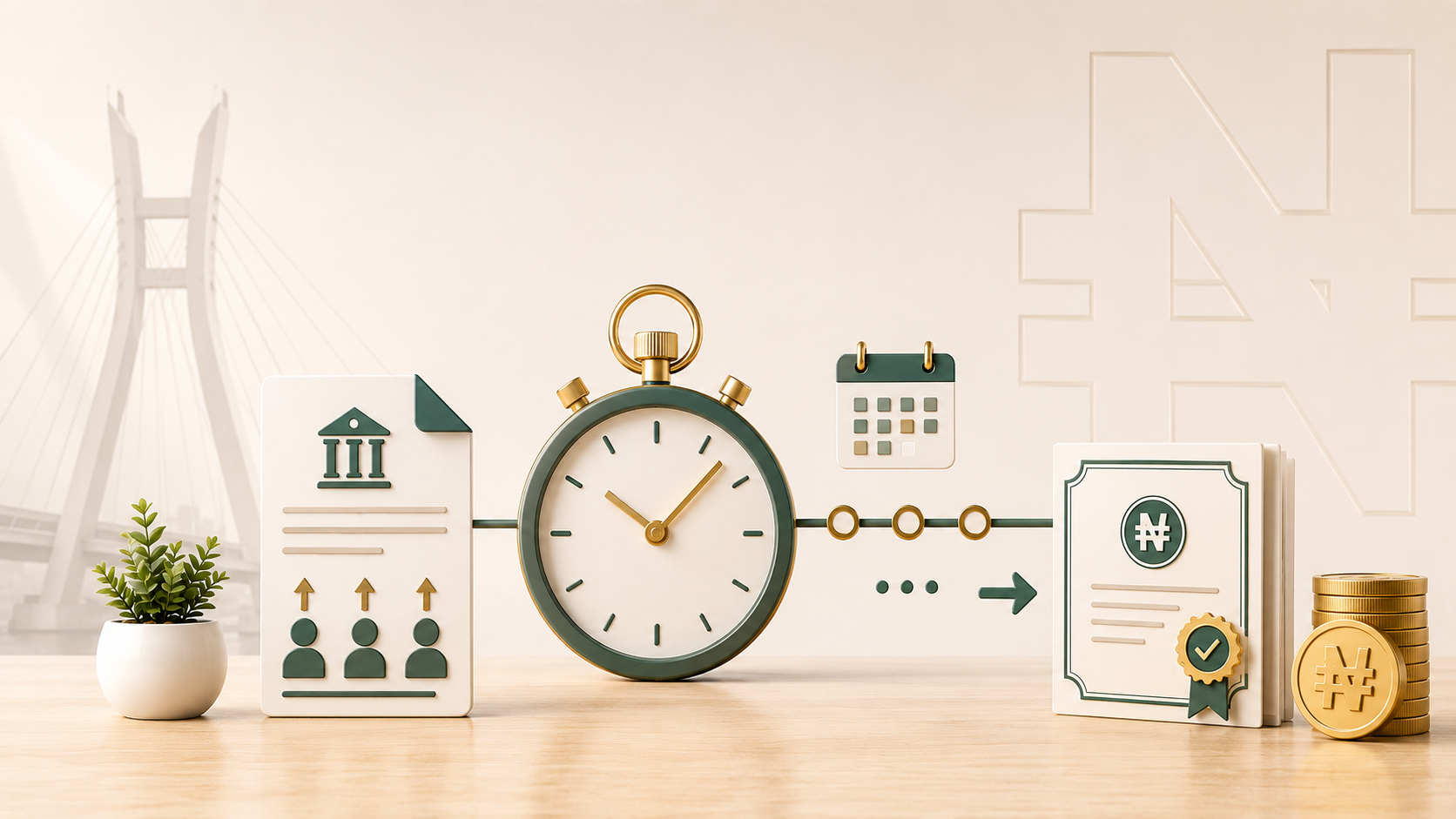
When you apply for shares in a Nigerian public offer, your money does not immediately turn into shares after the offer closes. The issuer, issuing house, registrarThe service provider that maintains ownership records and processes specified investor entitlements., SEC, and sometimes the exchange still have to complete the allotmentThe amount of securities awarded to a bidder or subscriber. process.
The practical answer is this:
Public offer allotment in Nigeria usually takes several weeks after the offer closes. Under SEC rules, the allotment proposal should be submitted not later than six weeks after the close of the issue. SEC may also grant an extension of up to two additional weeks.
So, if you subscribed to a public offer and the offer has just closed, do not expect your shares to appear in your CSCS accountAn electronic securities account maintained within Nigeria's central depository system. the next day. A more realistic expectation is about four to six weeks, with some cases taking longer if there are regulatory, documentation, oversubscriptionA situation in which investor demand exceeds the amount of securities offered., reconciliation, or listing delays.
#What Happens After a Public Offer Closes?
A public offer does not end completely on the closing date. The closing date only marks the end of the subscriptionThe process of buying new units in a fund by submitting money and a valid instruction. period. After that, the issuing house and other parties to the offer must reconcile the applications and prepare the basis of allotment.
The process usually looks like this:
- The offer closes.
- Applications are reconciled.
- Invalid or rejected applications are identified.
- The issuing house prepares the allotment proposal.
- The allotment proposal is submitted to the Securities and Exchange Commission.
- SEC reviews and clears the allotment.
- Successful subscribers receive their securities.
- Rejected or excess application monies are refunded.
- Where applicable, the securities are listed or credited through CSCS.
This is why there can be a gap between the date the offer closes and the date investors actually see the shares in their account.
#The SEC Timeline: Up to Six Weeks, With Possible Extension
SEC rules provide that an allotment proposal should be presented to the Commission not later than six weeks after the close of the issue.
The rule also allows SEC to grant a written extension where it considers it necessary in the public interest and for the protection of investors. That extension should not exceed two weeks.
This means the regulatory window can stretch from six weeks to about eight weeks before the allotment proposal process is resolved, depending on the circumstances of the offer.
This does not mean every public offer will take eight weeks. Some offers may move faster. But investors should understand that there is a formal regulatory process behind the scenes.
#What Is the “Basis of Allotment”?
The basis of allotment explains how the available securities are shared among subscribers.
This becomes especially important when an offer is oversubscribed. For example, if a company offers 1 billion shares to the public but investors apply for 3 billion shares, not everyone can receive the full number of shares they applied for.
In that case, the issuer and issuing house must decide how to allocate the shares fairly, subject to SEC clearance.
The allotment proposal usually includes information such as:
- the total applications received;
- the list of large subscribers;
- rejected applications and the reasons for rejection;
- the proposed allotment method;
- the draft public announcement.
Once SEC clears the basis of allotment, the issuer can proceed with publication, refunds, and crediting of securities.
#What Happens If the Offer Is Oversubscribed?
If a public offer is oversubscribed, subscribers may receive fewer shares than they applied for.
For example, if you applied for 10,000 shares, you may receive 6,000 shares or another lower number depending on the final allotment formula.
The balance of your money should be returned to you as surplus application money.
Oversubscription is not necessarily bad. It may show strong investorA person or organisation that commits capital with the expectation of a financial return. interest. But it also means your final allotment may be lower than your application.
#What Happens If the Offer Is Undersubscribed?
If an offer is undersubscribed, the outcome depends on the structure of the offer.
Some offers are underwritten. In that case, the underwriterA firm that helps structure and sell a securities offering and may commit to purchase unsold securities. may take up part of the unsubscribed securities based on the underwriting agreement.
If the offer is not underwritten and does not meet the required subscription level, the offer may be aborted. Where an issue is aborted, investors should receive their money back within the required timeline.
This is why investors should read the prospectusThe formal document explaining a fund's objective, strategy, risks, fees, governance, and dealing rules. carefully before subscribing. The prospectus usually explains the minimum subscription level, underwriting arrangement, expected allotment date, refund date, CSCS credit date, and listing date.
We use Stock Analysis to know if a stock will perform well or not — it gives us the updated data needed to make informed investment decisions.
#When Will the Shares Enter Your CSCS Account?
Allotment clearance and CSCS credit are related, but they are not the same thing.
SEC clearance confirms the basis of allotment. CSCS credit is the process of recording the allotted shares in investors’ depository accounts.
After SEC clearance, the registrar and other market parties still need to process the crediting of shares. The offer timetable in the prospectus usually gives an estimated CSCS credit date.
If you subscribed through a broker or investmentAn asset or commitment of money made with the expectation of future income, growth, or both. platform, you may need to check your CSCS account, CHNA unique clearing-house number used to identify an investor within Nigeria's securities depository system., broker statement, or platform dashboard to confirm when the shares have been credited.
#When Should You Expect a Refund?
If your application is rejected or you receive fewer shares than you paid for, the excess money should be returned to you.
Refunds may happen after SEC approves the allotment proposal. The timing can depend on the registrar, payment method, and whether your application details were correct.
If your bank account details, BVN, name, CSCS number, or CHN were incorrect, your refund or share credit may be delayed.
#Why Allotment Can Be Delayed
Allotment may take longer than expected for several reasons:
- the offer received a very large number of applications;
- some applications contained wrong or incomplete investor details;
- the offer was oversubscribed and required a careful allotment formula;
- the issuing house had to resolve reconciliation issues;
- SEC requested corrections or additional information;
- the issuer had to meet listing or post-allotment requirements;
- refunds and CSCS credits took longer to process.
A delay does not always mean something is wrong. But if the delay goes far beyond the stated offer timetable, investors should start asking questions.
#What Investors Should Check in the Prospectus
Before subscribing to any public offer, check the offer timetable in the prospectus.
Pay attention to:
- the offer opening date;
- the offer closing date;
- the proposed allotment date;
- the SEC clearance date;
- the refund date;
- the CSCS credit date;
- the listing date;
- the minimum subscription level;
- whether the offer is underwritten;
- how rejected or excess application monies will be returned.
These dates help you know what to expect and when to follow up.
Keep learning — create your free account
It's free, and takes seconds with just your email.
- Free investment courses & certificates
- A weekly watchlist + market-rate digest
- Inflation, monetary policy & naira-dollar rates
#What Should You Do If Your Shares Are Not Allotted?
If the expected allotment or CSCS credit date has passed, first confirm that the offer has received SEC clearance. Then check with the broker, platform, registrar, or receiving agent you used for the application.
You should have the following details ready:
- your full name;
- application reference number;
- amount paid;
- number of shares applied for;
- payment evidence;
- CSCS number;
- CHN;
- bank account details;
- broker or platform used.
If the issue remains unresolved, you can escalate to the registrar, the issuing house, or SEC.
#Final Answer
For most investors, the simple answer is this:
After a Nigerian public offer closes, allotment will usually take several weeks. SEC rules allow the allotment proposal to be submitted within six weeks after the close of the issue, with a possible extension of up to two weeks.
After SEC clears the allotment, the issuer still needs to publish the allotment, process refunds where necessary, credit successful subscribers, and complete listing steps where applicable.
So, if you subscribed to a public offer, the most important document to check is the prospectus. The prospectus gives the offer-specific timetable, and that timetable is what you should use to track your allotment, refund, CSCS credit, and listing date.
Test your knowledge
Under SEC rules, within how many weeks after the close of a public offer must the allotment proposal be submitted?
Become a member
Graded practice exercises with instant answer evaluation, daily streaks, certificates, and access to the private members community.
Become a memberCourses you might like
See all →
Startup Investor Fundamentals
Learn how startup and private company investing works, how to evaluate deals, understand ownership and dilution, verify claims, and avoid common beginner mistakes.
Compound Interest
Learn how money grows when returns stay invested, and how time, regular contributions, and inflation affect your results.
The Nigeria Capital Market
Most Nigerians who want to invest do not know who controls the market, what the rules are, or which platforms are safe to use. This course walks you through the entire Nigerian investment system, who the players are, what they do, what you can invest in, and how to check that anyone you give your money to is legitimate.